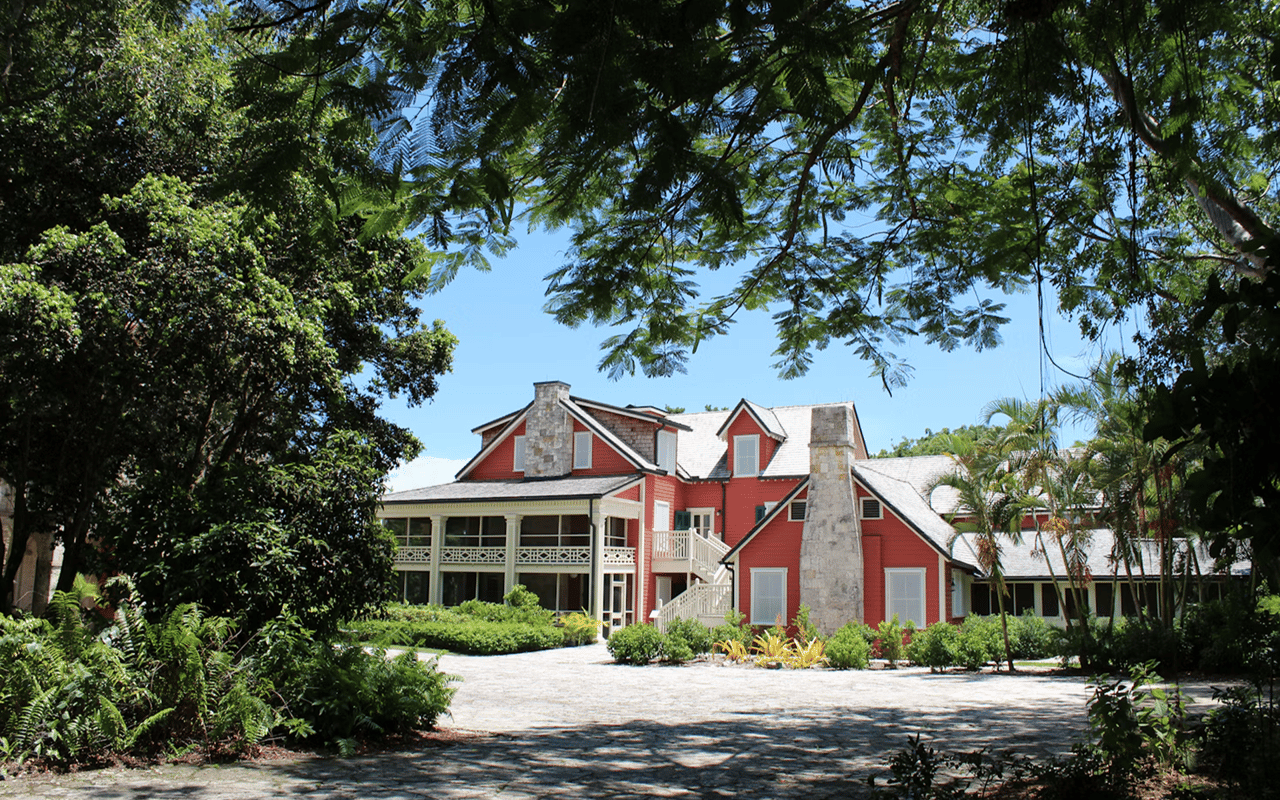
Take one of the custom homes in Country Place, the gated Parkland enclave whose homes went up between 1989 and 1993. If the owner has claimed homestead there for decades, its assessed value has risen under the Save Our Homes cap for all those years. The buyer who closes on it in 2027 starts over at the purchase price. Florida's Amendment 3 is on Tuesday's ballot. If it passes, that buyer could also wait several years longer than the seller for the larger exemption, depending on where the buyer lived on New Year's Eve 2026.
For anyone weighing a Country Place sale or purchase over the next year, Amendment 3's effect on the closing table rests on one date that falls before most 2027 contracts are even written.
December 31, 2026 Is the Date to Watch
Here is the official ballot summary, as printed in the Florida Division of Elections 2026 amendment booklet:
"Persons who are not Florida residents on December 31, 2026, will receive the existing homestead exemption upon qualifying for a homestead exemption, with the increased homestead exemption beginning with the fifth year of exemption, to the extent permitted by the U.S. Constitution."
The test in that sentence is Florida residency, not ownership of a Parkland home. A family already living in Florida on December 31 who buys in Country Place later would get the increased exemption once it qualifies for homestead. A family relocating from another state after that date would get the existing exemption at first, and the larger figure would start with its fifth year of exemption.
The Broward County Property Appraiser adds a second date to this. Homestead eligibility depends on ownership and permanent residence as of January 1 of the tax year. The ballot language uses December 31 and the appraiser's rule uses January 1, so the two dates sit one night apart. A relocation scheduled around a school calendar or a job start could end up on either side of the line.
The phrase "to the extent permitted by the U.S. Constitution" is in the official text, which leaves room for courts to weigh in later. This provision already went through one legal round. A Leon County circuit judge ruled on August 3, 2026 that the original ballot title and summary were misleading, and the language voters now see is the revised version, according to the Florida Policy Institute's voter guide.
What the Larger Exemption Covers
Under the official summary, the homestead exemption for non-school taxes would rise to $150,000 in 2027 and $250,000 in 2028, with inflation adjustments after that. The Florida TaxWatch FAQ says the CPI adjustments would begin in 2029 and that school property taxes are excluded entirely.
For a Parkland homeowner, three levies show the size of the school portion:
| Levy | Fiscal 2027 rate | Covered by the larger exemption |
|---|---|---|
| City of Parkland operating | 4.2979 mills | Yes |
| Broward County | 5.6628 mills | Yes |
| Broward County Public Schools | 6.4527 mills | No |
The city rate was adopted in September 2026, the county rate comes from Broward's FY2027 budget message dated October 16, 2026, and the school figure is the total listed in the district's September 8, 2026 second-hearing budget. Across those three levies alone, schools make up about 39% of the combined 16.4134 mills. An actual tax bill also includes other taxing authorities and non-ad valorem assessments, so the share on any given Country Place bill will differ.
Here is a rough illustration at the fiscal 2027 city and county rates. Exempting an extra $100,000 of assessed value from those two levies, about the step from today's $50,000 exemption to $150,000, is worth roughly $996 a year. Moving to the full $250,000, an extra $200,000 above the current exemption, is worth roughly $1,992. Rates are reset every year, so these figures only show the order of magnitude.
Why the Same House Gets Two Different Treatments
Amendment 3 leaves Save Our Homes alone. Florida TaxWatch says annual increases in homestead assessed value would still be capped at 3% or the change in the Consumer Price Index, whichever is lower, and portability stays in place.
That is why a fixed exemption lands differently on the two sides of a sale. A longtime Country Place owner's assessed value may sit far below market value after decades of capped increases. A $250,000 exemption takes a large share of that smaller base. The buyer's assessed value starts near the purchase price, so the same $250,000 removes a smaller share. In its October 20, 2026 analysis, the Tax Foundation found that long-term homesteaders with a large accumulated Save Our Homes benefit could get a greater relative benefit from a fixed exemption than owners whose assessed value is close to market.
The buyer from out of state carries both pieces. Their assessment resets at purchase, as it always has, and if they were not a Florida resident on December 31, 2026, the larger exemption would not start until their fifth year of exemption. A Country Place seller who stays in Florida and buys another homestead would be a Florida resident on December 31, 2026, so the larger exemption would apply to the new home once it qualifies for homestead.
The Seller's Side Changed in July
The longtime owner faces a different question, which is how much of the Save Our Homes benefit moves with them. That rule changed this year, separately from the ballot.
HB 7031E, the 2026 Special Session E tax package, amends Florida Statute 193.155(8) to cover new homesteads where the owner held a homestead exemption in any of the three immediately preceding years. Florida TaxWatch summarizes it as allowing a homeowner to transfer the accrued benefit from any homestead abandoned in the prior three years, instead of only the most recent one. The act took effect July 1, 2026, and the changes to s. 193.155 first apply to the 2027 tax roll.
The Broward County Property Appraiser describes portability as moving a Save Our Homes benefit to a new Florida homestead. The owner has to apply for homestead on the new property within three tax years of leaving the old one. A Country Place seller moving within Florida keeps that path whatever happens Tuesday. A seller leaving the state does not take the benefit with them.
Second Homes and Rentals Get a Different Change
Some Country Place houses are not anyone's homestead. For those, the relevant line of the amendment is a different one. The ballot summary cuts the annual cap on assessment increases for non-homestead property from 10% to 5%. Florida TaxWatch confirms that second homes and rental or investment homes would not qualify for the larger homestead exemption but would come under the lower cap.
An owner who leases a Country Place home and an owner who lives in one would see different changes on their bills under the same amendment.
Parkland's Budget Is Already Planning Around It
City finance staff presented their estimate to the commission in September. The Citizen Portal account of that meeting reports that Finance Director Kelly Schwartz estimated Amendment 3 could reduce Parkland's ad valorem revenue by about $4.3 million in the first year and $8.5 million in the second, with larger losses possible under higher exemption scenarios. Commissioners adopted the 4.2979-mill rate and a $69.8 million fiscal 2027 budget on a 4–1 vote and were warned about possible shortfalls tied to the amendment. The same coverage reports that the city decided to monitor some capital items, including a splash pad and roundabouts, until the tax question is settled.
At the county scale, Florida TaxWatch estimates a $535.7 million reduction for Broward County and the local entities in its county table in fiscal 2027-28. The amendment also tells the Legislature to set up a uniform process that would let counties and cities raise their own homestead exemptions up to full assessed value. Special districts could do the same with referendum approval. TaxWatch notes that the amendment does not require any local government to use that option and sets no timeline for it.
For a household buying in Country Place, the tax bill would depend on the state exemption, the buyer's residency date, and later local budget decisions that have not been made yet.
The Sequence From Here
- November 3, 2026. The Florida Division of Elections notes that a constitutional amendment needs at least 60% voter approval to pass.
- December 31, 2026. The residency date in the ballot summary for the increased exemption.
- January 1, 2027. The amendment's effective date if approved, and the first year of the $150,000 non-school exemption.
- January 1, 2028. The non-school exemption rises to $250,000.
- 2029 onward. Annual inflation adjustments, according to Florida TaxWatch.
If the amendment fails, the current $50,000 exemption structure and the 10% non-homestead cap remain. The expanded portability window in HB 7031E is already law either way.
Frequently Asked Questions
Does Amendment 3 remove property taxes on a Country Place homestead? No. Florida TaxWatch states that homeowners would still pay school property taxes, and the amendment does not by itself eliminate a homeowner's bill.
Does the fifth-year rule apply to someone already renting in Florida? The official summary ties the rule to whether a person was a Florida resident on December 31, 2026. It does not depend on whether they owned a home on that date.
Do Senior, veteran or widow exemptions change? Florida TaxWatch says the existing personal exemptions, including those for widows and widowers, seniors, veterans and people with disabilities, are unchanged.
All of this is general information and not legal, tax or financial advice. Please confirm how these rules apply to your property and your timeline with a qualified tax professional or the Broward County Property Appraiser's office.
Whatever the result on Tuesday, a Country Place sale or purchase in 2027 will need its residency dates, homestead filings and portability paperwork lined up before closing. If you would like to line up your listing or purchase dates with that calendar, Bill Sohl and our team can build the transaction timeline and connect you with the tax and legal professionals who can answer the questions specific to your household. Contact Us.